
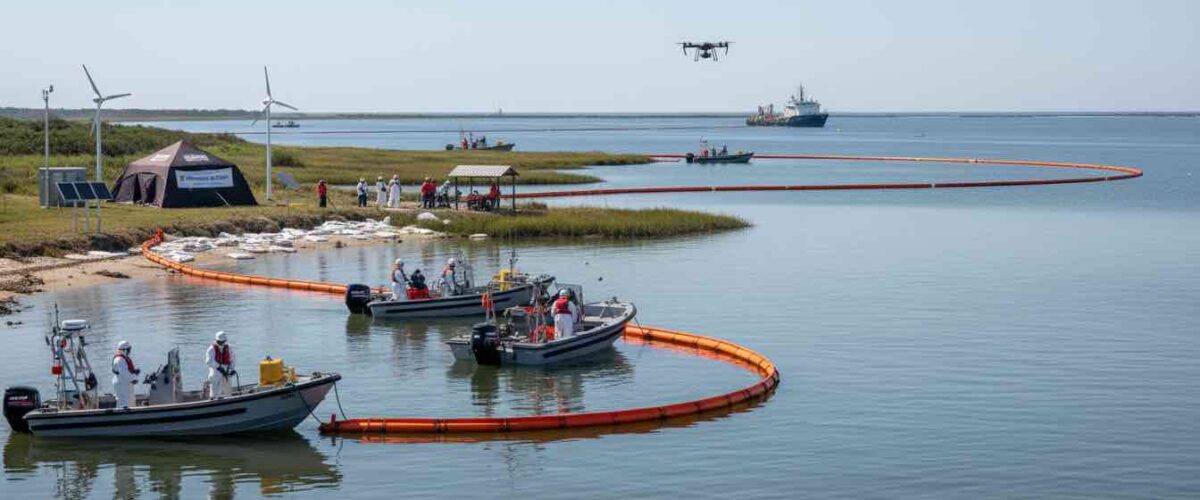
Midshore oil and gas platforms located between nearshore and deepwater operations play a crucial role in global petroleum production. While these platforms offer economic and logistical advantages, they also face significant operational risks, including oil spills. Preventing and responding to spills is critical not only for environmental protection but also for regulatory compliance, corporate reputation, and operational continuity.
Understanding Midshore Platforms
Midshore platforms typically operate in water depths ranging from 20 to 200 meters. They often serve as production hubs for multiple wells and may involve complex logistics for transportation, processing, and storage. The proximity to coastlines increases environmental sensitivity and the need for robust spill prevention and response systems.
Key Oil Spill Prevention Strategies
- Robust Well Design and Maintenance
- Blowout preventers (BOPs): Installing and regularly testing high-integrity BOP systems reduces the risk of uncontrolled hydrocarbon releases.
- Regular inspections: Structural integrity of pipelines, risers, and storage tanks should be routinely assessed using non-destructive testing and remote monitoring systems.
- Advanced Monitoring Systems
- Real-time sensors: Flow meters, pressure sensors, and leak detectors can quickly identify anomalies that indicate potential spills.
- Remote monitoring: Satellite imagery, drones, and underwater autonomous vehicles (AUVs) provide early detection of leaks and surface oil.
- Operational Controls and Training
- Standard operating procedures (SOPs): Ensuring that all personnel follow stringent procedures during drilling, production, and transfer reduces human error.
- Simulation exercises: Regular training and spill response drills prepare staff for rapid, coordinated action during emergencies.
- Containment Systems
- Secondary containment: Bunds, berms, and double-walled tanks help prevent accidental release from reaching the marine environment.
- Booms and skimmers: Pre-deployed equipment can contain and recover oil before it spreads.
Effective Oil Spill Response Strategies
- Rapid Mobilization and Communication
- Establishing an Incident Command System (ICS) ensures clear leadership and communication among platform operators, regulators, and emergency responders.
- Early notification protocols reduce response times and limit environmental impact.
- Mechanical Recovery
- Booms: Floating barriers contain oil on the water surface.
- Skimmers: Mechanical skimmers remove oil from the water for storage and proper disposal.
- Chemical and Biological Methods
- Dispersants: Chemicals break down oil into smaller droplets, enhancing natural biodegradation—but require careful environmental assessment.
- Bioremediation: Microbial agents accelerate the breakdown of oil in controlled, monitored environments.
- Environmental Monitoring and Impact Assessment
- Post-spill, continuous monitoring of water, sediment, and marine life is essential to evaluate ecological impact and guide remediation.
- Data-driven assessments inform adaptive management strategies and regulatory reporting.
Regulatory and Industry Standards
Midshore platforms operate under strict regulatory frameworks to ensure spill prevention and response readiness:
- International Maritime Organization (IMO) guidelines for oil pollution preparedness and response.
- OSPAR Convention regulations for operations in the North-East Atlantic.
- National standards, including U.S. Bureau of Safety and Environmental Enforcement (BSEE) and EU environmental directives, mandate contingency planning, training, and equipment readiness.
Future Trends in Spill Prevention and Response
- Digital twin technology: Real-time virtual models of platforms help simulate spill scenarios and optimize preventive measures.
- AI-based predictive maintenance: Machine learning algorithms predict equipment failures before they occur, reducing risk.
- Enhanced recovery techniques: New materials and robotic systems improve efficiency in oil capture and environmental restoration.
Oil spill prevention and response on midshore platforms require an integrated approach combining technology, training, and regulatory compliance. From advanced monitoring and containment systems to rapid response protocols and environmental remediation, operators must continuously adapt to emerging risks. By prioritizing prevention and preparedness, midshore platforms can protect marine ecosystems, maintain operational integrity, and ensure sustainable energy production.
Read more on Sparkview Energy:
Environmental Innovations in Oil Spill Cleanup Technology
Crisis Management in Midshore Operations: Planning for the Unexpected
Drones in Midshore Oil and Gas: Enhancing Inspection and Monitoring